| Home . Formation . Equipment . Funding . Local Agreements . Captains . 1897-1933 . Joint Brigade . WW2 . Post War . 1950s . Fires . Gallery | |||||||||||
|
Russell's
Cottages 1934 |
|||||||||||
  |
|
||||||||||
|
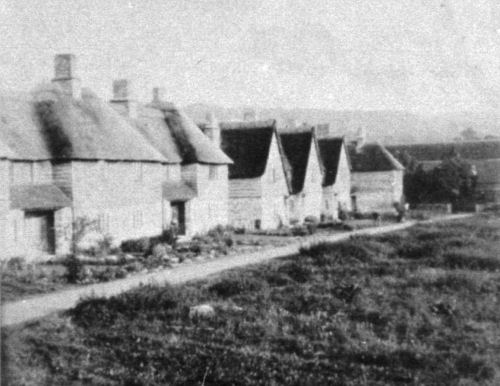
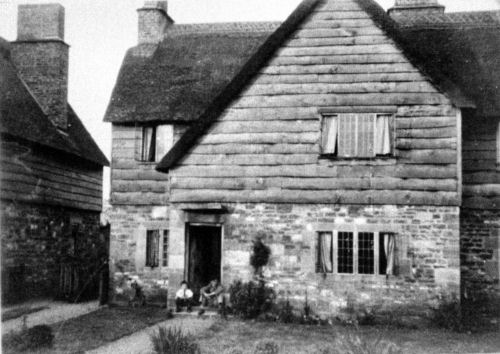
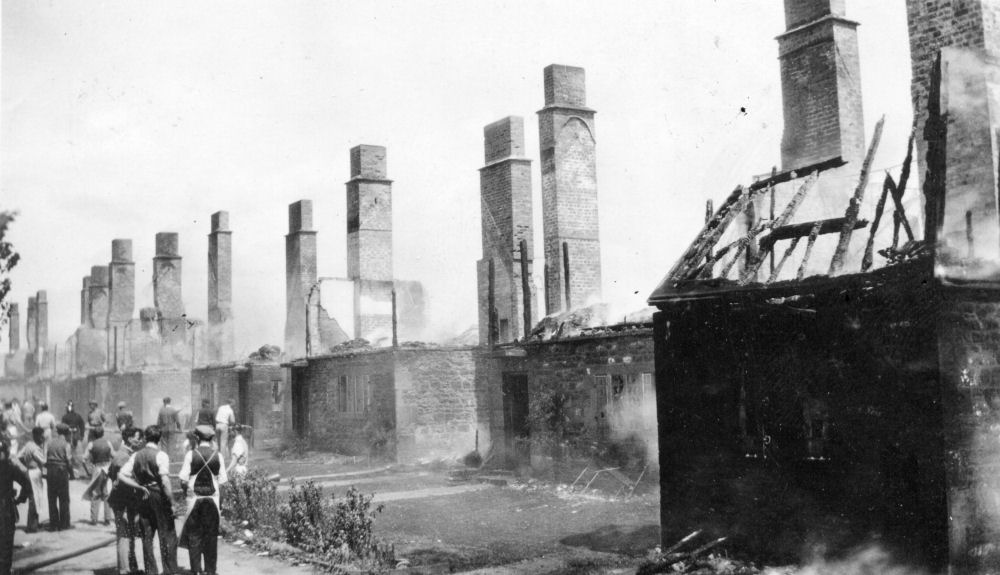
At about 11am on the day of the fire Percy Treherne, the factory engineer, discovered that the cottage occupied by himself and his family was on fire. He ran to raise the alarm, and returned with a ladder which he pitched against the roof. Using fire extinguishers he tried desperately to douse the flames. At this time the area of roof on fire, looking from the outside, appeared quite small. Unfortunately his efforts were to no avail as the fire had already taken a firm hold under the thatch. |
|||||||||||
 |
|||||||||||
|
Close
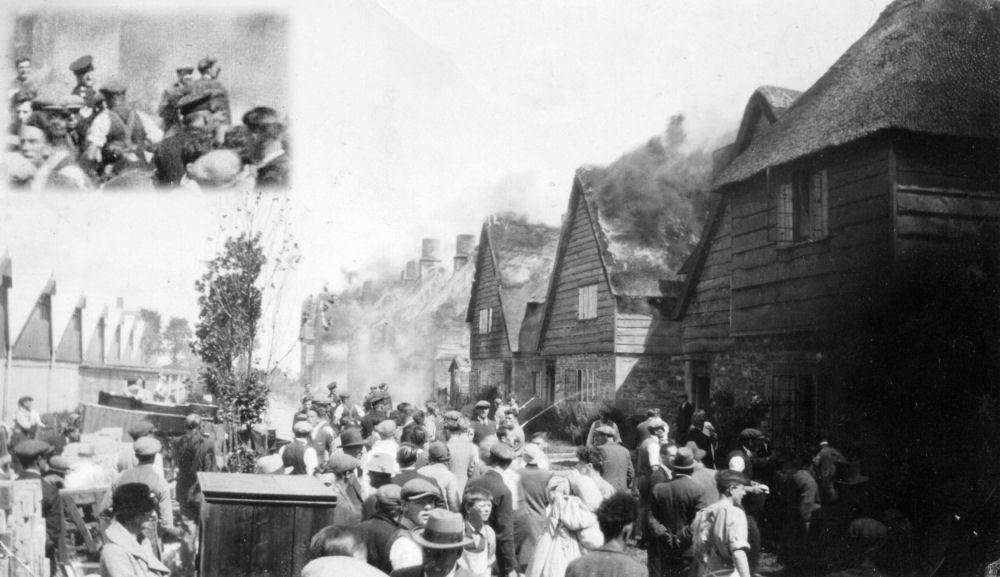
examination of this photo (see inset) indicates the fire brigade was
already on the scene; as two firemen can be see amongst the crowd. It's
not clear though whether the thin jet of water is coming from one of
their hoses or from some other source.
|
|||||||||||
|
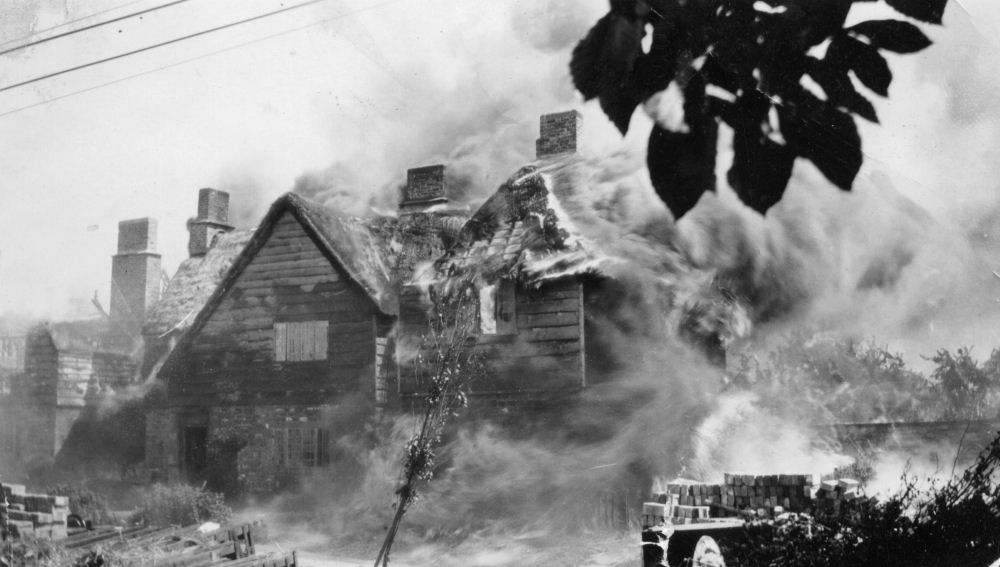
The
fire spread rapidly as workers from the factory rushed to save furniture
and personal belongings from the cottages. In the confusion one occupier,
Mrs Keen, had a narrow escape when furniture being salvaged was placed
against the back door of her cottage. With her back door blocked, and
unable to escape via the front due to heat from the fire, she made her
exit, with her young son, through a rear window. Such was the ferocity
of the fire, very little could be saved, and within fifteen minutes
all ten properties were engulfed in flames.
|
|||||||||||
 |
|||||||||||
|
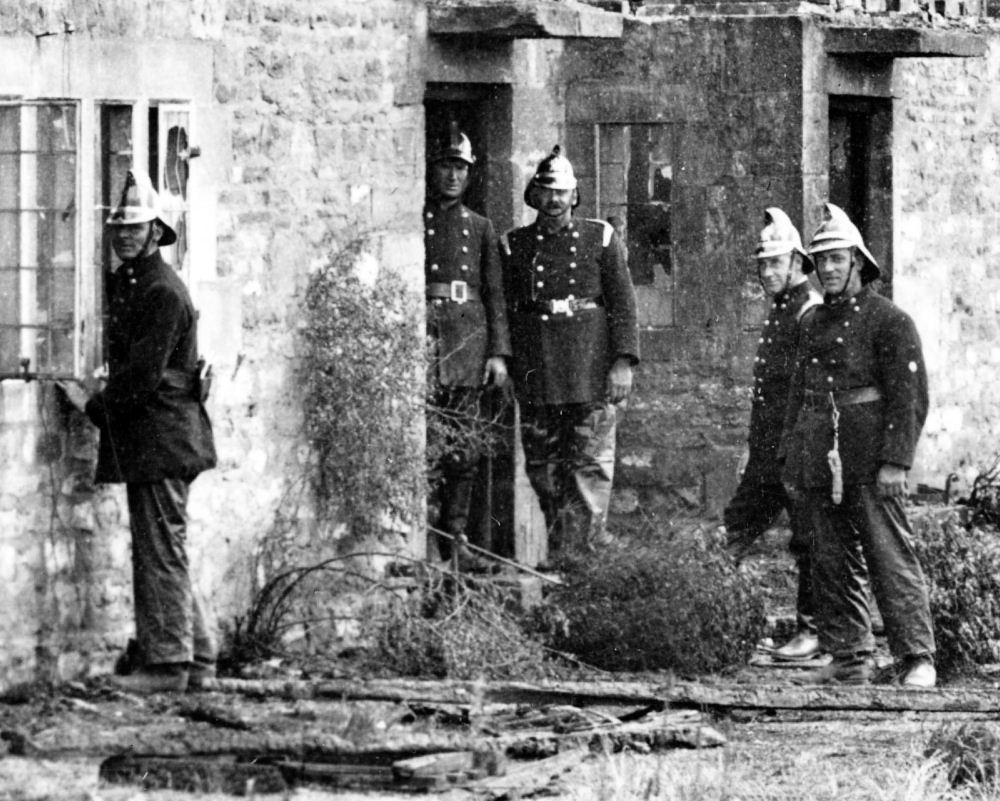
The
Broadway fire brigade was quickly on the scene, followed, later, by
the district brigade from Pershore, and brigades from Blockley and Stratford.
The Broadway firemen connected their hose to a hydrant. But the poor
condition of the hose was immediately apparent as water spurted from
the many leaks along its length. It became obvious there was no chance
of saving the cottages, so efforts were concentrated on preventing the
fire from spreading to neighbouring properties. A strong wind carried
burning thatch in the direction of the Lygon Arms Hotel. Frantic efforts
were made to prevent a thatched cottage belonging to the hotel catching
fire. Staff positioned themselves on the roof, and extinguished the
burning embers as they fell. A large thatched barn belonging to the
factory was also in danger.
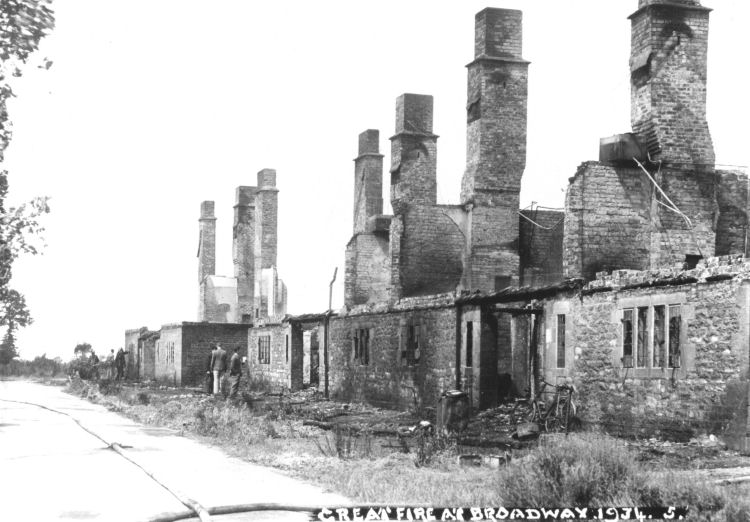
Two more cottages standing a short distance away from the others, and upwind of the fire survived, largely due to the efforts of Bob Cook who had been working in the garden of a neighbouring property. He ran up and down a ladder with buckets of water keeping the thatch wet to prevent radiated heat igniting it. Heat from the fire was so intense that it cracked glass in the windows of the adjacent factory, and cooked vegetables growing in the Lygon Hotel's garden nearby. There were, surprisingly, no serious injuries, however several people including Mrs Keen and the policeman, P.C. Brodie, suffered minor burns. By midday, only one hour after the first flames were spotted, the fire had almost burned itself out, leaving ten families, a total of forty-one people, homeless. |
|||||||||||
 |
|||||||||||
|
What
caused the fire to start is unclear, but its rapid development was assisted
by a strong wind and drought conditions. In the weeks following, questions
were of course raised about the inadequacy of fire fighting facilities
in the village. But it is difficult to see what more could have been
done in this case.
Even if all the resources available today had been at hand then, it is doubtful whether any of the properties could have been saved, given the speed and ferocity with which the fire spread. There was no excuse, though, for the appalling condition of the Broadway fire hose. According to the reports, it was necessary for helpers to hold their hands over the holes in a vain attempt to prevent the escape of water along its length. A relief fund was set up immediately, and by the time the appeal closed on 3rd August donations totaling £536.16.4d had been received, to be shared between the ten families made homeless. The two cottages which survived the fire still stand at the rear of the factory site. A stone wall which was behind the burning cottages is also there today, and shows clear signs of scorching. |
|||||||||||
|
|
|||||||||||
 |
|||||||||||
 |
|||||||||||
|
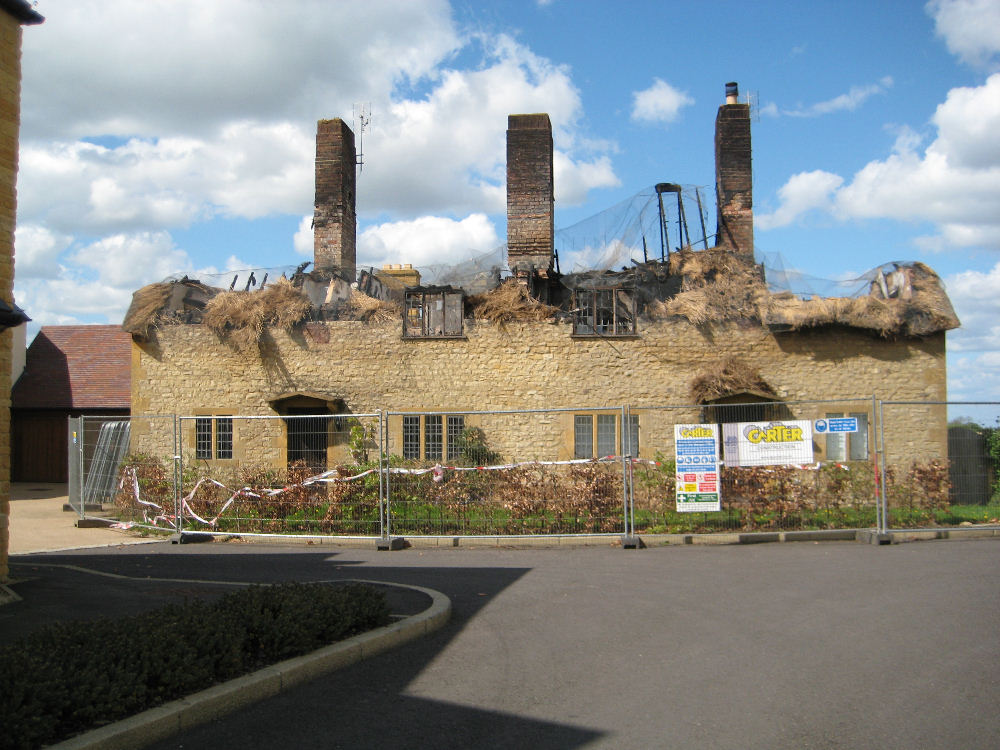
As a post
script to this story, the two cottages which survived the 1934 fire
were severely damaged by fire, seventy-five years later, in 2009. |
|||||||||||
 |
.jpg) |
||||||||||
|
|
|||||||||||